
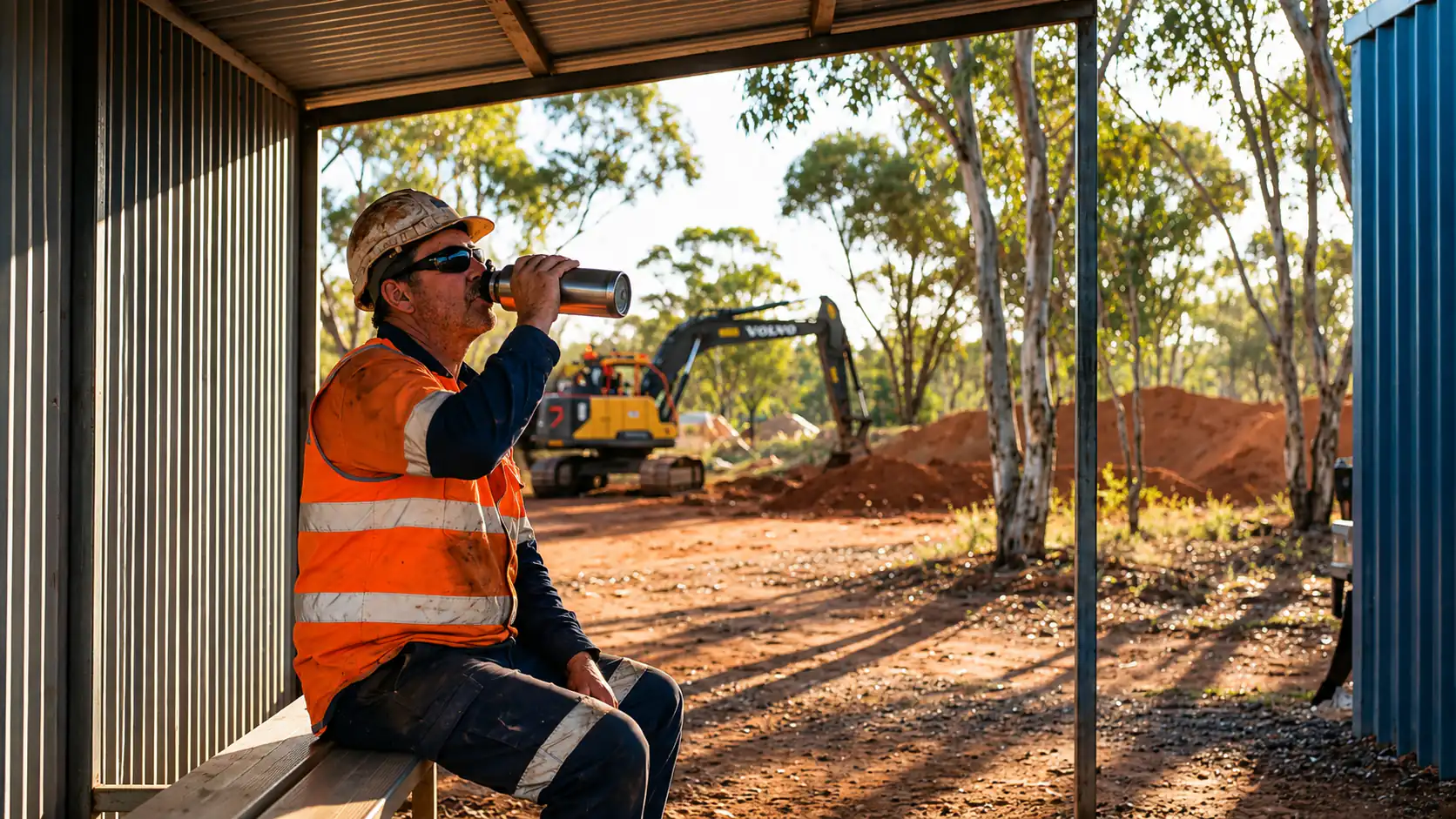
Australian workplaces can expose employees to demanding environmental conditions, particularly in outdoor, industrial, construction, mining and remote work settings. Heat can add another layer of pressure to an already demanding working day.
When employees are also dealing with inadequate sleep, extended shifts or physically demanding tasks, fatigue risk can become more difficult to manage.
Understanding the relationship between environmental conditions, recovery and workplace performance is therefore an important part of fatigue management training.
Beyond Midnight Consulting’s training resources include heat and hydration content within its broader modular approach, allowing organisations to select education relevant to their operational circumstances.
Why Environmental Conditions Matter
Fatigue does not develop in isolation. Workplace conditions can influence how employees feel and perform during a shift.
Hot environments may make physically demanding work more challenging, particularly when employees are required to remain active for extended periods. If workers are already affected by insufficient sleep or irregular schedules, the overall demands placed on them may increase.
This is why workplace fatigue training should reflect the real environment where employees perform their duties.
A worker completing a short administrative task indoors may face very different circumstances from someone performing physical work outdoors for several hours.
Hydration Is Part of the Bigger Picture
Hydration is commonly discussed in relation to hot working conditions, but it should form part of a wider approach to employee wellbeing and fatigue awareness.
Workers should understand their workplace’s established hydration procedures, particularly when working in environments with significant heat exposure.
Organisations can reinforce this education through practical measures such as:
- Accessible drinking water.
- Appropriate rest opportunities.
- Suitable work and break arrangements.
- Communication about heat-related concerns.
- Training relevant to the work environment.
- Clear escalation processes.
- Monitoring changing environmental conditions.
The exact controls should reflect the workplace, task and operational requirements.
The objective is not simply to provide information but to ensure employees understand how to respond appropriately.
Heat, Sleep and Recovery Can Interact
Recovery begins before an employee arrives at work.
A person who has not obtained adequate sleep may begin a demanding shift with reduced reserves. If the work also involves heat, physical exertion or sustained concentration, managing fatigue can become more challenging.
This is why sleep and fatigue management should consider more than the number of hours an employee spends at work.
Employees can benefit from understanding:
- The importance of adequate sleep.
- How shift patterns can affect recovery.
- Why fatigue warning signs matter.
- How demanding environments may increase pressure.
- When to communicate concerns.
- The importance of following workplace controls.
Education helps employees connect individual recovery with operational safety.
The Supervisor’s Role in Managing Changing Conditions
Supervisors have an important role when workplace conditions change.
They may be responsible for monitoring operational demands, communicating expectations and responding when employees raise concerns. A supervisor who understands fatigue can also recognise that performance changes may have several contributing factors.
Supervisor fatigue management training can help leaders develop a more informed approach to fatigue-related concerns.
This does not mean supervisors are expected to diagnose medical conditions or control an employee’s private life. Their role is to understand workplace risks, follow organisational procedures and respond appropriately when fatigue may affect safe performance.
Building Fatigue Controls Around the Actual Job
There is no single fatigue control that suits every workplace.
An organisation working outdoors may need to consider environmental exposure. A transport operator may need to consider driving duration and shift timing. A mining operation may need to consider heavy equipment and remote conditions.
This is why tailored fatigue risk management training can be valuable.
Beyond Midnight Consulting’s online model allows organisations and individuals to select modules relevant to their needs, while its face-to-face programs can be tailored to particular organisations and operational environments.
The same principle applies to fatigue controls: understand the work first, then select appropriate strategies.
Practical Questions for Teams
Teams can use simple questions to encourage better fatigue awareness:
- What conditions make fatigue more difficult to manage here?
- Which tasks require sustained alertness?
- Are recovery opportunities adequate?
- Do workers understand hydration and heat procedures?
- Can employees report fatigue concerns without hesitation?
- Do supervisors know how to respond?
- Are fatigue controls reviewed when operational conditions change?
These questions can encourage constructive conversations without turning fatigue into a blame issue.
They can also help identify where additional employee fatigue training may be useful.
Why Education Needs to Be Reinforced
A single training session can introduce important concepts, but fatigue awareness should remain part of ongoing workplace communication.
Organisations may reinforce learning through toolbox discussions, refresher education, supervisor conversations and targeted training modules.
Online learning can also provide flexibility for employees working across different locations or rosters. Beyond Midnight Consulting’s online platform provides modular learning, assessments and progress tracking, allowing participants to complete relevant content at their own pace.
This can be particularly useful for organisations with diverse teams and changing operational demands.
Conclusion
Heat, hydration and fatigue should not be viewed as completely separate workplace issues. Environmental conditions, physical demands, sleep, recovery and work schedules can all form part of the broader fatigue picture.
Practical education helps employees understand these relationships and gives supervisors a stronger foundation for managing workplace concerns.
Beyond Midnight Consulting provides employee fatigue training, fatigue awareness training and tailored learning options that can help Australian organisations build practical fatigue controls around their real operating environments. Contact the team today to discuss training suited to your workforce and workplace conditions.
Contact Beyond Midnight Consulting or call us 📞 +61 427 275885 today to build a practical fit-for-work culture that supports safer decisions, stronger communication and sustainable workplace performance across your workforce.
